HSK 3.0 Syllabus: Topics, Tasks, and Grammar by Level
Official syllabus · published November 2025 · in force July 2026 · exams worldwide from 13 December 2026
Sources:CTI explorer406-page PDFLaunch notice

Seven levels at a glance
Words climb from 300 to 11,000. Open a level to see what it sounds like, what to learn first and a real task.
Easy words, sneaky grammar
HSK 1 is 300 everyday words, from 你好 to 再见, and most beginners pick them up fast. People get stuck on the grammar: three ways to say “can” (会, 能, 可以), verbs that split in two like 睡觉, and two different uses of 了. Spend your practice there.
Topics include
- Personal info
- Weather
- Asking directions
- Course info
Sounds like
Nǐ jiào shénme míngzi?
你叫什么名字?
What's your name?
Learn first
Three ways to say “can”
会 · 能 · 可以
A real task
Introduce yourself
你叫什么名字?
我叫王明,我是中国人。
Few new words, lots of new grammar
HSK 2 adds only 197 words, but the grammar is a much bigger step. The traps are the three “de” (的, 得, 地), 过 for things you have done and 着 for things still going on. Get those right, then add 比 to compare.
Topics include
- Appearance & clothing
- Eating habits
- Travel
- Study history
Sounds like
Wǒ shì zuò huǒchē lái de.
我是坐火车来的。
I came by train.
Learn first
Put 得 after the verb and 地 before it
动词 + 得 + …… · …… + 地 + 动词
A real task
Talk about yourself
你的生日是几月几号?
我的生日是五月十号。
Say what happens to things
HSK 3 adds 493 words and the two constructions learners find hardest: 把, for what you do to something, and 被, for what happens to it. Both put the object where English would not. Practise them until they stop feeling backwards.
Topics include
- Office affairs
- Health
- Climate
- Modern life
Sounds like
Wǒ yǐjīng bǎ yóujiàn fāgěi jīnglǐ le.
我已经把邮件发给经理了。
I've already sent the email to the manager.
Learn first
Use 把 to say what you do to something
主语 + 把 + 宾语 + 动词 + ……
A real task
Describe someone you know
你姐姐是做什么工作的?
她是医生,平时很忙。
From sentences to paragraphs
HSK 4 doubles your vocabulary to 2,000 words and expects paragraphs, not single sentences. The skill to build is linking ideas: 尽管 for “even though”, 既然 for “since”, 否则 for “otherwise”. Pick one story from your own life and practise telling it in full.
Topics include
- Asking for help
- Renting & buying
- HR
- New technology
Sounds like
Jǐnguǎn fángzū yǒudiǎnr guì, dànshì zhèlǐ lí gōngsī hěn jìn.
尽管房租有点儿贵,但是这里离公司很近。
Although the rent is a little high, this place is very close to work.
Learn first
Use 了 to say whether an action is possible
动词 + 得/不 + 了
A real task
Describe a person's character and experience
你对新来的同事印象怎么样?
她很有耐心,以前当过老师,解释问题特别清楚。
Explain how things work
HSK 5 adds 1,579 words, many about how things work: insurance, hiring, community rules, the economy. You start writing short arguments, so learn the words that steer them: 可见 to draw a conclusion, 一旦 for what happens once something does, 反而 when the result surprises.
Topics include
- Mental health
- Community
- Learning insights
- Research
Sounds like
Zìcóng gōngsī gǎibiàn le guǎnlǐ fāngshì, yuángōng zhījiān de hézuò jiù gèngjiā mìqiè le.
自从公司改变了管理方式,员工之间的合作就更加密切了。
Since the company changed its management approach, staff have been working more closely together.
Learn first
Draw a conclusion from evidence
……,可见…… · ……,因而……
A real task
Ask about insurance conditions
您好,我想了解这份保险,住院的费用都包括吗?
不一定,您先看看这些条件,有不清楚的地方我再解释。
Formal Chinese, everyday rhythm
HSK 6 adds 1,777 words for public life: infrastructure, investment, disasters, AI. Reading turns formal while conversation stays quick and idiomatic, so you need both. Learn to hedge with 未必, set conditions with 除非 and state a purpose with 以便.
Topics include
- Infrastructure
- Investing
- Disasters
- Tech products
Sounds like
Zhè zuò chéngshì zhèngzài gǎishàn gōnggòng jiāotōng, yǐbiàn jūmín chūxíng gèngjiā fāngbiàn.
这座城市正在改善公共交通,以便居民出行更加方便。
This city is improving public transport to make getting around easier for residents.
Learn first
Leave room for uncertainty
未必
A real task
Report a lost bank card
您好,我的银行卡丢了,能麻烦您帮我处理一下吗?
可以,请您先提供身份证,我们马上处理。
Argue like a professional
HSK 7, 8 and 9 share one band and the biggest jump: 5,562 more words for research, business and public debate. The grammar splits between formal written structures and sharp spoken set phrases. Start with three patterns that carry an argument: 与其 for “rather than”, 纵然 for “even if”, 故 for “therefore”.
Topics include
- Law
- Macroeconomics
- AI
- Aerospace
Sounds like
Zhè xiàng yánjiū de jiàzhí búyàyú zǎoqī de fāxiàn, dàn qí jiélùn réng yǒudài yànzhèng.
这项研究的价值不亚于早期的发现,但其结论仍有待验证。
The value of this study is no less than that of the early discoveries, but its conclusions still need to be verified.
Learn first
Choose an alternative deliberately
与其……,宁愿/宁可……
A real task
Explain a change in your priorities
工作几年以后,你对成功的理解有什么变化?
以前我只看收入,现在更重视能否持续学习,以及有没有时间陪伴家人。
Cumulative words are the official syllabus totals; HSK 1–2 use HSKStory’s word lists. New words come from those lists, so they do not add up exactly to the official totals. Grammar and topics are counted per level. CEFR is approximate, and HSK 7–9 is one shared band.
What the syllabus defines
Most HSK resources stop at word lists. The official syllabus also says what you should be able to talk about, do and say at each level.
11,000
official word entries
10,896 distinct items once repeated entries are merged. Each level includes the levels below it.
512
grammar points
Counted per level, so some repeat. From 是 sentences at HSK 1 to formal written patterns at HSK 7–9.
427
topic entries
What you can talk about. Summed across overlapping outlines, so not 427 separate topics.
166
can-do tasks
Real-life communication areas, such as asking directions or handling paperwork. Plan practice around them.
Put your Chinese to work in a story
Every one has word-level pinyin, narrated audio and tap-to-define.
 HSK 1
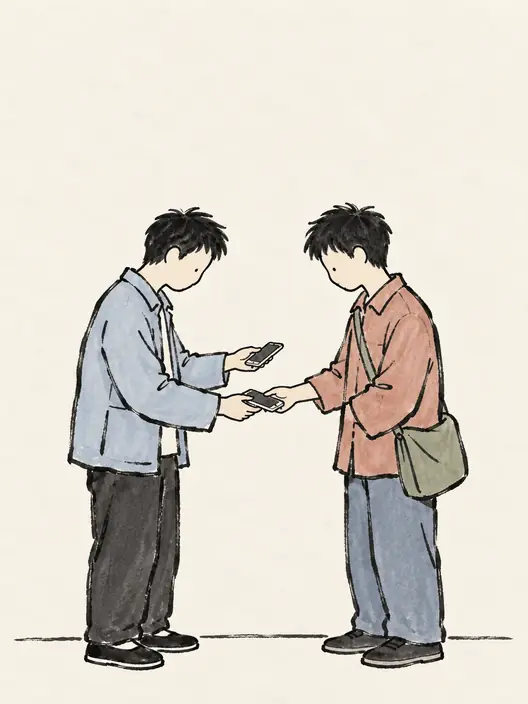
HSK 1The Wrong Phone
Two classmates take identical phones by mistake and can’t unlock them or answer calls.
3 chapters · audio + pinyin
 HSK 2
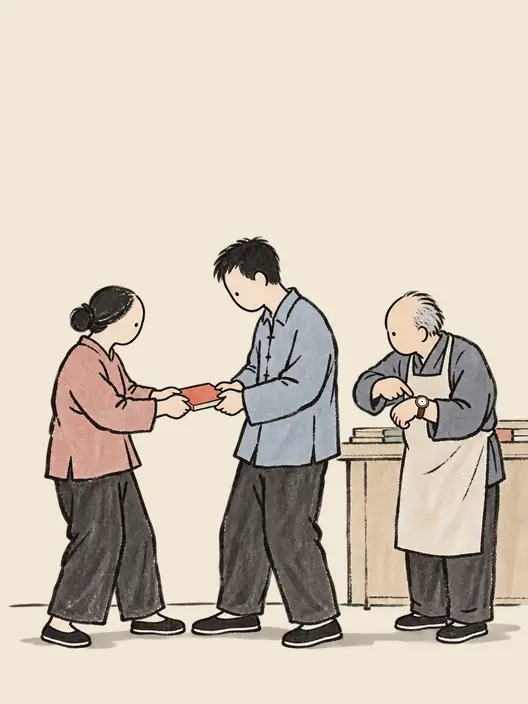
HSK 2The Book We Both Wanted
Two customers claim one childhood book; a shopkeeper gives them until six to explain why.
4 chapters · audio + pinyin
 HSK 3
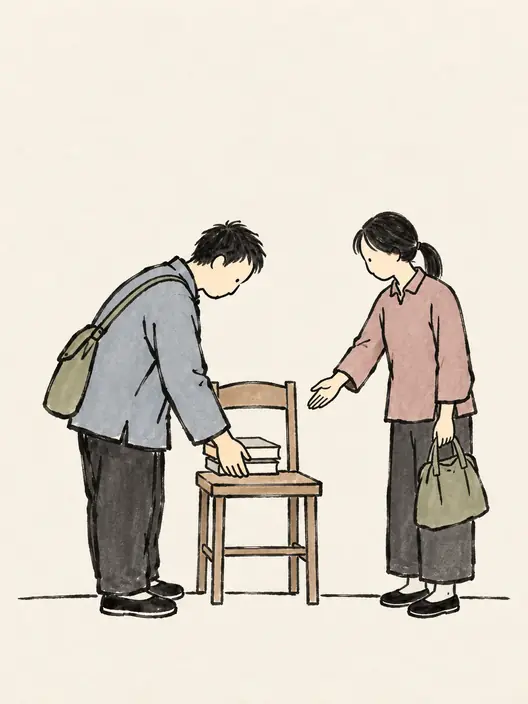
HSK 3No Seat in the Library
She resents a classmate who keeps saving an empty seat. Then she hears about his sick roommate.
6 chapters · audio + pinyin
 HSK 4
HSK 4Sunrise on Huangshan
Four friends go to see the Huangshan sunrise and get train delays, a storm, and a bad booking.
6 chapters · audio + pinyin
 HSK 5
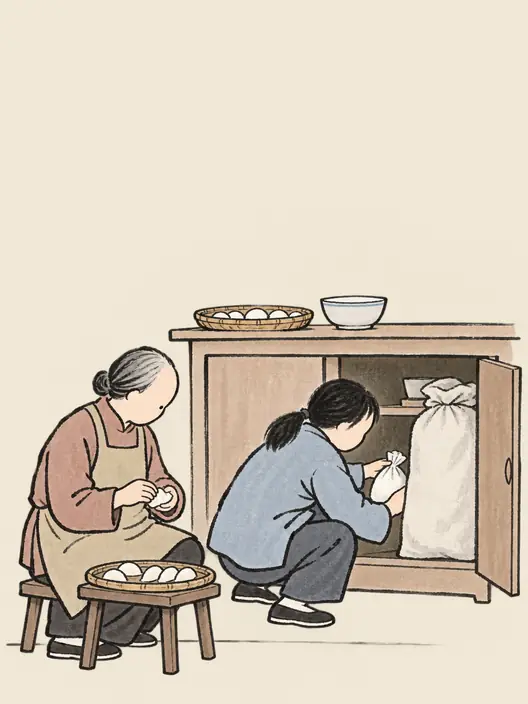
HSK 5Dumplings or Tangyuan
Her first winter solstice as a wife, and her mother-in-law has hidden the tangyuan flour.
6 chapters · audio + pinyin
 HSK 6
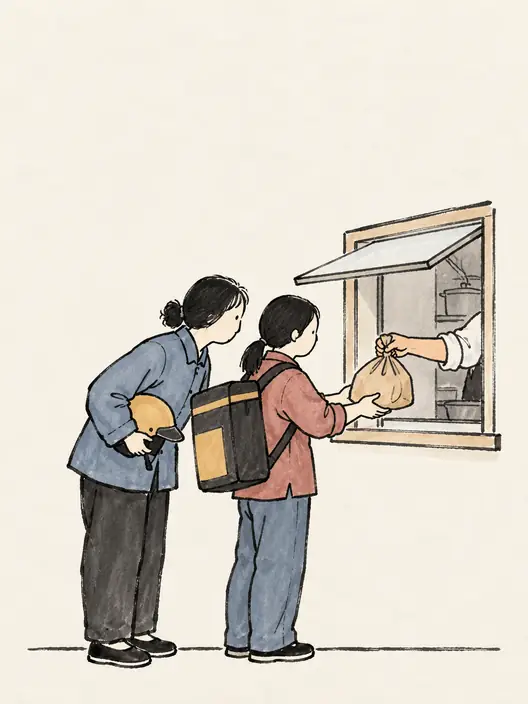
HSK 6The Kitchen Behind the App
Illness complaints lead an inspector to twelve delivery restaurants sharing four kitchens.
6 chapters · audio + pinyin
How to use this syllabus
01
Choose your level
Open the detailed syllabus for the level you are studying.
See the levels02
Read at your level
Graded stories use the same words and grammar, with pinyin and audio.
Browse stories03
Check your vocabulary
Compare what you know against the full word list.
Complete word list04
Practise the tasks
Use the task areas to plan speaking practice, not as a list of exam questions.
Related guides
- Complete HSK 3.0 word list10,896 items with pinyin and meanings
- HSK 3.0 vocabulary analysisWord counts, character reuse and the chengyu jump
- What is HSK 3.0?The new nine-level exam, explained
- HSK 3.0 vs HSK 2.0What changed, side by side
- Prepare for HSK 3.0Exam status and how to study each level
- HSK 7–9 advanced levelsThe shared advanced band, explained
Frequently asked questions
Is the HSK 3.0 syllabus just a vocabulary list?
No. The official syllabus defines three dimensions beyond vocabulary: topics (what you can discuss), tasks (what you can do with the language), and grammar (what structures you need). This guide covers all three.
Why are HSK 7, 8, and 9 grouped together?
The official HSK 3.0 framework assigns one shared topic, task, and grammar syllabus to HSK 7-9. The combined HSK 7-9 exam reports a level result from overall performance rather than using three separate syllabus scopes.
Are the CEFR levels official?
The CEFR labels on this page are orientation — a useful comparison for learners familiar with European language levels. They are not official HSK-CEFR certifications.
How many topics does each HSK level cover?
Counting leaf-topic entries in each level outline, HSK 1 has 30, HSK 2 has 34, HSK 3 has 54, HSK 4 has 77, HSK 5 has 72, HSK 6 has 68, and HSK 7-9 share 92. These outlines overlap, so their 427-entry sum is not a count of distinct cumulative topics.
Did all HSK exams switch when the syllabus became effective in July 2026?
No. The July 2026 date on the syllabus does not itself change every scheduled exam. CTI has announced the worldwide HSK 3.0 exam launch for 13 December 2026. Check the version and arrangements named in your booking.
Where does this syllabus data come from?
The topic, task, vocabulary, character, and grammar data comes from the official 406-page HSK examination syllabus published in November 2025 and effective from July 2026. Examples shown here are curated selections, not exhaustive lists.