HSK 2 Syllabus: Topics, Tasks, and Grammar
Few new words, lots of new grammar. HSK 2 adds only 197 words, but the grammar is a much bigger step. The traps are the three “de” (的, 得, 地), 过 for things you have done and 着 for things still going on. Get those right, then add 比 to compare.
 AnthonyUpdated
 What HSK 2 sounds like
Wǒ shì zuò huǒchē lái de.
我是坐火车来的。
I came by train.
Wǒ zuò wán fàn jiù chūqù le.
我做完饭就出去了。
I went out as soon as I finished cooking.
Suīrán jīntiān hěn lěng, dànshì wǒ háishi xiǎng qù yóuyǒng.
虽然今天很冷,但是我还是想去游泳。
Although it's cold today, I still want to go swimming.
AnthonyUpdated 496
words in total
125
new characters
75
grammar points
34
topics
17
can-do tasks
2-minute readiness check
Do you understand this?
1 / 8你说得太快了。
HSK 2 grammar points
75 official points. These five are where HSK 2 learners actually get stuck.
- 1
Put 得 after the verb and 地 before it
Tā Zhōngwén shuō de hěn hǎo.
她中文说得很好。
She speaks Chinese very well.
Háizimen gāoxìng de huíjiā le.
孩子们高兴地回家了。
The children went home happily.
动词 + 得 + …… · …… + 地 + 动词得 introduces how well or how fast an action goes. 地 links a description to the action that follows.
Common mistake: Using 得 before the verb: write 慢慢地走, not 慢慢得走.
- 2
Use 过 for an experience
Wǒ qù guò Zhōngguó liǎng cì.
我去过中国两次。
I've been to China twice.
Wǒ méiyǒu zuò guò fēijī.
我没有坐过飞机。
I've never been on a plane.
动词 + 过 · 没有 + 动词 + 过过 says you have done something before. It answers whether you have the experience, rather than when it happened.
Common mistake: Negating an experience with 不: use 没有去过, not 不去过.
- 3
Use 着 for a state that continues
Xǐshǒujiān de mén kāi zhe.
洗手间的门开着。
The bathroom door is open.
Lǎoshī shǒulǐ ná zhe yì běn shū.
老师手里拿着一本书。
The teacher is holding a book.
动词 + 着着 keeps a state in view, such as an open door or someone holding a book. 正在 focuses on an action happening now.
Common mistake: Treating 着 as an ending for every action happening now: for studying, use 正在学习.
- 4
Say the result or direction after the verb
Wǒ kàn wán zhè běn shū le.
我看完这本书了。
I've finished reading this book.
Māma zǒu jìnlái le.
妈妈走进来了。
Mum walked in.
动词 + 懂/完/好 · 动词 + 进来/出去/回来A result complement says what the action achieves. A direction complement says where it goes; 来 is toward the speaker and 去 is away.
Common mistake: Using 了 alone to mean "finished": 做了 says you did it; 做完了 says you finished it.
- 5
Compare two things with 比
Zhè běn shū bǐ nà běn shū guì shí yuán.
这本书比那本书贵十元。
This book costs ten yuan more than that one.
Wǒ méiyǒu gēge nàme gāo.
我没有哥哥那么高。
I'm not as tall as my older brother.
A + 比 + B + 形容词 · A + 没有 + B + 那么 + 形容词Put the thing you describe first, then 比 and what you compare it with. The adjective comes last. For “not as … as”, use 没有……那么.
Common mistake: Putting 很 before the adjective: use 比我高, not 比我很高.
What can you do after HSK 2?
The 17 official tasks, each as the tiny conversation it means. Tick the ones you could have yourself.
Talk about yourself
Nǐ de shēngrì shì jǐ yuè jǐhào?
你的生日是几月几号?
What date is your birthday?
Wǒ de shēngrì shì wǔyuè shí hào.
我的生日是五月十号。
My birthday is the tenth of May.
Explain what happened
Nǐ wèishénme lái wǎn le?
你为什么来晚了?
Why are you late?
Yīnwèi wǒ chūmén de shíhou xiàyǔ le.
因为我出门的时候下雨了。
Because it started raining when I was leaving home.
Describe and compare things
Zhè liǎng ge shūbāo, nǎge dà yìdiǎnr?
这两个书包,哪个大一点儿?
Which of these two schoolbags is bigger?
Hóngsè de bǐ hēisè de dà yìdiǎnr.
红色的比黑色的大一点儿。
The red one is a little bigger than the black one.
Describe the weather
Jīntiān bǐ zuótiān rè ma?
今天比昨天热吗?
Is it hotter today than yesterday?
Duì, jīntiān bǐ zuótiān rè duō le.
对,今天比昨天热多了。
Yes, it's much hotter than yesterday.
Describe a place
Nǐ jiā lí dìtiě zhàn yuǎn ma?
你家离地铁站远吗?
Is your home far from the metro station?
Bù yuǎn, zǒulù wǔ fēnzhōng jiù dào le.
不远,走路五分钟就到了。
No, it's only a five-minute walk.
Ask for help politely
Nǐ néng bāng wǒ ná yíxià zhège bāo ma?
你能帮我拿一下这个包吗?
Could you hold this bag for me for a moment?
Kěyǐ, gěi wǒ ba.
可以,给我吧。
Sure, give it to me.
0 of 17 ticked · saved on this device
HSK 2 topics
The 34 official topics, each with one sentence you could say about it.
Basic information 基本信息
Appearance, clothing, birthday
Jīntiān shì mèimei de shēngrì, tā chuānzhe xīn yīfu.
今天是妹妹的生日,她穿着新衣服。
It's my little sister's birthday today. She's wearing new clothes.
Identity, habits, hobbies, origin
Wǒ cóngxiǎo jiù xǐhuan yóuyǒng.
我从小就喜欢游泳。
I've liked swimming since I was little.
Events, people, time, method, address, reason, change, state
Wǒmen míngtiān xiàwǔ zuò gōngjiāochē qù kàn nǎinai.
我们明天下午坐公交车去看奶奶。
We're taking the bus to visit Grandma tomorrow afternoon.
Name, color, difference, quantity, location, features
Zhuōzi shàng yǒu liǎng běn shū, hóngsè de bǐ báisè de xiǎo.
桌子上有两本书,红色的比白色的小。
There are two books on the table. The red one is smaller than the white one.
Weather
Zuótiān shì yīntiān, jīntiān qíng le.
昨天是阴天,今天晴了。
It was cloudy yesterday, but it's clear today.
Environment features
Wǒmen jiā pángbiān yǒu yígè hěn dà de shāngchǎng.
我们家旁边有一个很大的商场。
There's a big shopping mall next to our home.
Daily life 日常生活
Basic polite behavior
Bùhǎoyìsi, wǒ lái wǎn le.
不好意思,我来晚了。
Sorry I'm late.
Simple interaction behavior
Qǐng bāng wǒ kāi yíxià mén.
请帮我开一下门。
Please open the door for me.
Wishes and feelings
Wǒ xīwàng míngnián néng qù Zhōngguó lǚyóu.
我希望明年能去中国旅游。
I hope I can travel to China next year.
Food and drinks
Wǒ xiǎng hē yì bēi nǎichá.
我想喝一杯奶茶。
I'd like a cup of milk tea.
Eating habits
Wǒ měitiān zǎoshang dōu chī yígè jīdàn.
我每天早上都吃一个鸡蛋。
I eat an egg every morning.
Eating out and meals
Zhè jiā fànguǎn de cài búcuò, wǒmen zài zhèr chī ba.
这家饭馆的菜不错,我们在这儿吃吧。
The food at this restaurant is good. Let's eat here.
Asking directions
Dào qiánmiàn wǎng zuǒ zǒu.
到前面往左走。
Turn left up ahead.
Travel methods
Wǒ měitiān zuò dìtiě qù gōngsī.
我每天坐地铁去公司。
I take the metro to work every day.
Travel arrangements
Wǒ yǐjīng mǎi hǎo le míngtiān de jīpiào.
我已经买好了明天的机票。
I've already bought my plane ticket for tomorrow.
Travel impressions
Zuò le yì tiān de chē, wǒ hěn lèi.
坐了一天的车,我很累。
I'm tired after spending all day on the road.
Choosing goods
Zhè tiáo kùzi tài cháng le, wǒ xiǎng kànkan nà tiáo.
这条裤子太长了,我想看看那条。
These trousers are too long. I'd like to look at that pair.
Product descriptions
Zhège shǒujī bǐ wǒ de xīn, yě bǐ wǒ de guì.
这个手机比我的新,也比我的贵。
This phone is newer than mine, and more expensive too.
Illness
Wǒ tóuténg, jīntiān bù xiǎng chūmén.
我头疼,今天不想出门。
I have a headache and don't feel like going out today.
Medical visits
Yīshēng ràng wǒ měitiān chī sān cì yào.
医生让我每天吃三次药。
The doctor told me to take medicine three times a day.
Leisure activities
Yéye xǐhuan zàijiā shàngwǎng kàn diànyǐng.
爷爷喜欢在家上网看电影。
Grandpa likes watching films online at home.
Leisure arrangements
Wǒ zhǔnbèi xīngqīliù gēn péngyou qù pǎobù.
我准备星期六跟朋友去跑步。
I'm planning to go running with a friend on Saturday.
Family relationships
Wǒ gēge de qīzi shì yīshēng.
我哥哥的妻子是医生。
My older brother's wife is a doctor.
Family activities
Wǎnfàn hòu, wǒmen yìjiārén yìqǐ kàn diànshì.
晚饭后,我们一家人一起看电视。
After dinner, our whole family watches TV together.
Education 教育情况
Basic situation
Wǒ měitiān xiàwǔ xué liǎng ge xiǎoshí Zhōngwén.
我每天下午学两个小时中文。
I study Chinese for two hours every afternoon.
Study experience
Wǒ xiǎoshíhou zài zhèr shàng xiǎoxué.
我小时候在这儿上小学。
I went to this primary school when I was little.
School situation
Wǒmen de jiàoshì zài èr lóu.
我们的教室在二楼。
Our classroom is on the second floor.
After-class activities
Xiàkè hòu, wǒ gēn tóngxué yìqǐ tī qiú.
下课后,我跟同学一起踢球。
After class, I play football with my classmates.
Work life 职场生活
Work information
Wǒ qīzi měitiān zǎoshang jiǔ diǎn kāishǐ gōngzuò.
我妻子每天早上九点开始工作。
My wife starts work at nine every morning.
Work experience and feelings
Wǒ zài zhè jiā gōngsī gōngzuò le sān nián, juéde hěn búcuò.
我在这家公司工作了三年,觉得很不错。
I've worked at this company for three years and I think it's pretty good.
Occupational situation
Wǒ zhàngfu zài gāozhōng jiāo Zhōngwén.
我丈夫在高中教中文。
My husband teaches Chinese at a high school.
Culture and tradition 文化与传统
Festivals
Guònián de shíhou, dàjiā dōu hěn gāoxìng.
过年的时候,大家都很高兴。
Everyone is happy at Chinese New Year.
Impressions of Chinese food
Zhè jiā diàn de bāozi zhēn hǎochī!
这家店的包子真好吃!
The steamed buns at this shop are delicious!
Major surnames and formal forms of address
Wáng xiānsheng zài wǒmen xuéxiào gōngzuò, dàjiā dōu jiào tā Wáng lǎoshī.
王先生在我们学校工作,大家都叫他王老师。
Mr Wang works at our school, and everyone calls him Teacher Wang.
The 125 HSK 2 characters
The characters HSK 2 adds, from the official list. Each level adds its own set. Tap one for its pinyin, meaning and the HSK 2 words that use it. Handwriting starts later: 100 characters to write by the end of HSK 2.
All 197 HSK 2 words →
Pinyin, meanings and examples from our stories.
HSK 2 practice test →
Timed questions in the HSK 3.0 format, scored instantly.
Free HSK 2 Anki deck →
Every word with audio, for spaced review.
Stories to start with
Every one has word-level pinyin, narrated audio and tap-to-define.
 HSK 2
HSK 2The Book We Both Wanted
Two customers claim one childhood book; a shopkeeper gives them until six to explain why.
4 chapters · audio + pinyin
 HSK 2
HSK 2Two Months Behind
He's two months behind, so he copies homework. The same mistakes give him away.
4 chapters · audio + pinyin
 HSK 2
HSK 2Two Days of Rain
Heavy rain cancels a family's mountain trip, and a boy loses his new umbrella at the mall.
4 chapters · audio + pinyin
 HSK 2
HSK 2Snow on the Day We Left
A blizzard grounds their flight north, and the hotel booking runs out before they arrive.
4 chapters · audio + pinyin
 HSK 2
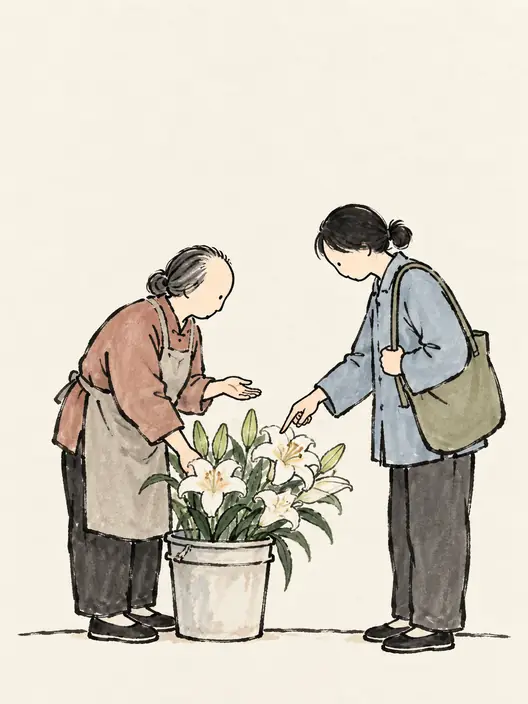
HSK 2Her First Month at the Shop
After twelve years at home, a mother joins a flower shop. The flower names won't stick.
4 chapters · audio + pinyin
 HSK 2
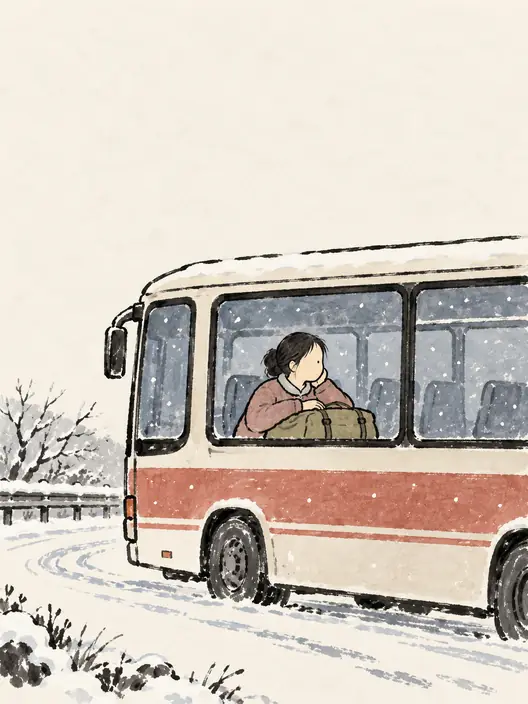
HSK 2Going Home for the New Year
After work cancels her only train home, a worker faces an icy 18-hour bus her mother fears.
4 chapters · audio + pinyin
Study tips
- Prioritize the grammar over the wordlistHSK 2 adds only 197 words, but it introduces complements, two more aspect markers, and the 得 and 地 particles. The grammar is where the difficulty of this level actually sits.
- Sort out the three de particles的 (HSK 1), 得 (before a complement, as in 说得很好), and 地 (before a verb, as in 慢慢地走) all sound the same. Getting them straight at HSK 2 prevents a habit that is hard to fix later.
- Treat complements as a systemResult complements (听懂, 做完) and directional complements (出来, 过去, 起来) both start here. Learn the underlying pattern rather than memorizing each combination as a separate word.
Related syllabus resources
- Free HSK 2 Anki deck
Study the 197 new HSK 2 words with audio and beginner story examples.
Frequently Asked Questions
Is this the full HSK 2 syllabus?
This page represents the full compact HSK 2 topic, task, and grammar syllabus from the local extracted HSK 3.0 source files. It keeps the official Chinese labels and adds English summaries for readability.
What changes in HSK 2 beyond vocabulary growth?
HSK 2 expands basic survival Chinese into routines, feelings, family life, study experience, work impressions, travel, and simple opinions.
What personal-life topics does HSK 2 add?
HSK 2 adds appearance, clothing, birthdays, habits, hobbies, family activities, work feelings, study experience, and travel impressions.
How should learners use the HSK 2 task list?
Use the task list as a map of practice domains for listening, speaking, reading, and writing at the level.
Is there an official HSK 2 syllabus PDF?
Yes. The official HSK 3.0 examination syllabus PDF covers vocabulary, characters, topics, tasks and grammar for all levels. The lists on this page come from that source. Official syllabus PDF