躺平 (tǎng píng, 'lying flat') is Chinese slang for opting out of the rat race — rejecting overwork, refusing to compete, and doing the minimum to get by. A defining term of China's Gen Z counter-culture.
What 躺平 means
In the dictionary
To lie down flat — a physical position, as in lying on your back.
What people mean online
A deliberate rejection of the grind: no overtime, no mortgage, no marriage pressure, no keeping up with anyone. Not depression — it's a philosophical opt-out. You stop running the race entirely and lie down on the track, daring society to drag you forward.
Character breakdown
How people use it
卷不动了,我已经躺平了,升职加薪跟我没关系。
"Can't grind anymore — I'm lying flat. Promotions and raises have nothing to do with me."
别人在抢优惠券,我在躺平,省钱的最高境界是不花钱。
"Everyone's fighting over coupons. I'm lying flat. The ultimate money-saving move is spending nothing."
房价涨跟我有什么关系?我躺平的人连租房都想省了,回老家住窑洞不香吗?
"What do rising housing prices have to do with me? I'm lying flat — I'm thinking about skipping rent altogether. What's wrong with a cave house back home?"
Where it comes from
In April 2021, a Baidu Tieba user named Luo Huazhong (骆华忠), posting as 'Kind-Hearted Traveller,' published a manifesto titled 《躺平即是正义》 (Lying Flat Is Justice). He'd quit his factory job, lived on 200 yuan a month, ate two meals a day, and occasionally picked up work as a corpse extra at Hengdian film studios. He quoted Diogenes and declared: 'Only by lying flat can man become the measure of all things.' The post went mega-viral — a Tieba forum called 躺平 exploded from 170 members to nearly 200,000 before censors shut it down.
The government treated tangping like a threat to national productivity. State outlet Nanfang Daily ran an editorial titled 'Lying flat is shameful — where's the sense of justice?' (reposted by Xinhua). The Communist Youth League posted that 'young people have never chosen to lie flat.' Censors deleted the original essay, banned the Weibo hashtag, closed Douban discussion groups, and ordered e-commerce platforms to pull tangping-branded T-shirts, phone cases, and car stickers from Taobao. In October 2021, Xi Jinping himself wrote in the party journal Qiushi urging society to avoid both 'involution' and 'lying flat.'
Tangping is often confused with 摆烂 (bailan) but the attitude is different: tangping is quiet withdrawal — you simply stop participating. Bailan is louder, more gleeful — you're not just quitting, you're celebrating the quit. Tangping also spawned international parallels: America's 'quiet quitting' trend in 2022 was widely attributed to the same impulse. The term was named one of China's top 10 internet buzzwords of 2021.
Common questions
What does 躺平 mean?
躺平 (tǎng píng) literally means 'lie flat.' In internet slang, it describes a deliberate rejection of China's hustle culture — no overtime, no mortgage chase, no marriage pressure, no keeping up with anyone. It's not laziness or depression; it's a philosophical opt-out. You stop running the rat race entirely and lie down on the track. The term went viral in April 2021 and was named one of China's top 10 internet buzzwords that year. It's used as a verb — '我躺平了' (I'm lying flat) — and carries a tone of calm defiance rather than despair.
Where did 躺平 come from?
In April 2021, a Baidu Tieba user named Luo Huazhong (骆华忠), posting as 'Kind-Hearted Traveller,' published a manifesto titled《躺平即是正义》(Lying Flat Is Justice). Luo had quit his factory job in 2016 at age 26, cycled 2,100 km from Sichuan to Tibet, and settled in Jiande, Zhejiang Province, living on roughly 200 yuan a month, eating two meals a day, and occasionally working as a corpse extra at Hengdian film studios. He quoted the Greek philosopher Diogenes — who gave up worldly life to live in a barrel — and declared: 'Only by lying flat can man become the measure of all things.' His Tieba forum exploded from 170 members to nearly 200,000 before censors shut it down.
Why did China censor 躺平?
The Chinese government treated tangping as a threat to national productivity and social stability. State outlet Nanfang Daily ran an editorial titled 'Lying flat is shameful,' which Xinhua reposted. The Communist Youth League posted that 'young people have never chosen to lie flat.' Censors deleted Luo Huazhong's original essay, banned the Weibo hashtag, closed a Douban discussion group with nearly 10,000 followers, and ordered e-commerce platforms to pull tangping-branded T-shirts, phone cases, and car stickers from Taobao. In October 2021, Xi Jinping himself wrote in the party journal Qiushi urging society to avoid both 'involution' and 'lying flat.' By 2025, the Cyberspace Administration of China mandated that social media platforms censor expressions of lying flat and other 'negative worldviews.'
What's the difference between 躺平 and 摆烂?
Both are reactions to 内卷 (involution), but the attitude is different. 躺平 is quiet, philosophical withdrawal — you simply stop participating in the rat race and lower your ambitions. It's a long-term life philosophy rooted in calm defiance. 摆烂 (bǎi làn, 'let it rot') is louder and more gleeful — you're not just quitting, you're celebrating the quit. It's typically a short-term, situational response to a specific failing situation rather than a worldview. The classic summary: 躺平 is peaceful disengagement, 摆烂 is joyful surrender. Young people joked about the triple bind: '卷又卷不赢、摆又摆不烂、躺又躺不平' (can't out-grind anyone, can't fully rot, can't properly lie flat).
Is 躺平 the same as quiet quitting?
They overlap but aren't identical. America's 'quiet quitting' trend — doing only what your job requires and nothing more — went viral in 2022 and was widely attributed to the same impulse as 躺平. Both reject the expectation that you should sacrifice your life for work. The difference is scope. Quiet quitting is specifically about workplace boundaries — you still show up, you just stop going above and beyond. 躺平 is a broader life philosophy: you opt out of the entire societal program, not just overtime. It rejects the mortgage, the marriage timeline, and the keeping-up-with-neighbors pressure. It also carries a uniquely Chinese dimension — it's a response to the 996 work culture, the gaokao sorting system, and housing prices that make a lifetime of grinding feel futile. Tangping also has international parallels beyond quiet quitting: South Korea's Sampo generation (giving up marriage and children), Japan's Freeter culture, and the global NEET phenomenon.
Related slang
Now read real Chinese, at your level
Every one has word-level pinyin, narrated audio and tap-to-define.
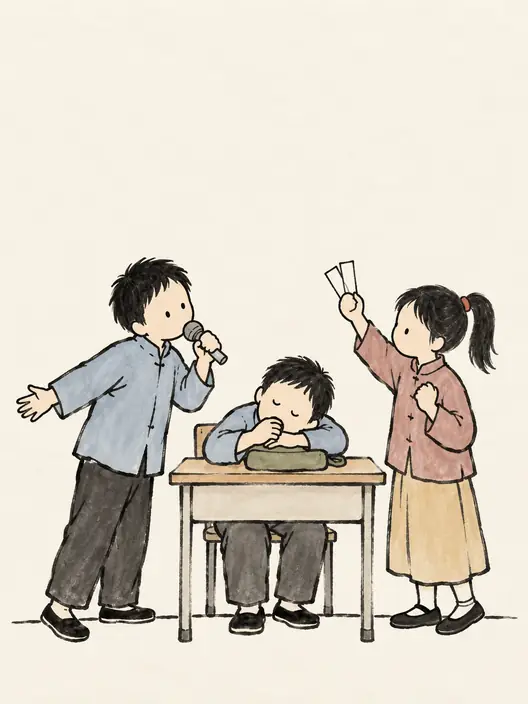 HSK 1
After Class
Three classmates want different things after class: singing, a movie, or sleep.
3 chapters · audio + pinyin
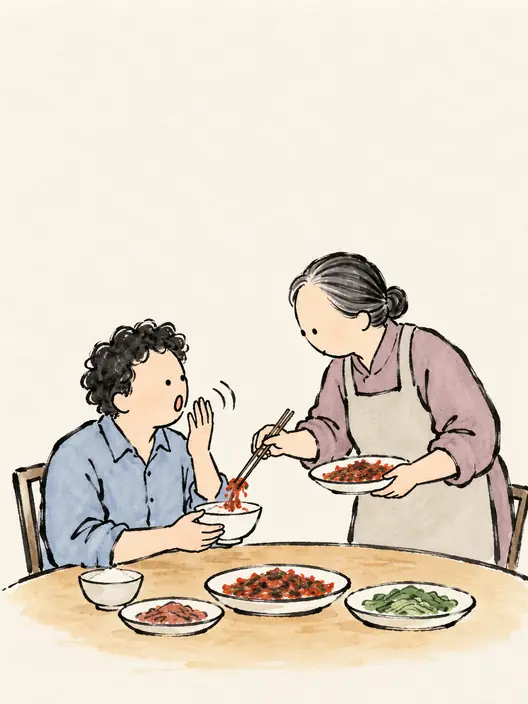 HSK 2
Too Spicy
A foreign guest struggles to fit in when her hosts’ meals are too spicy for her.
4 chapters · audio + pinyin
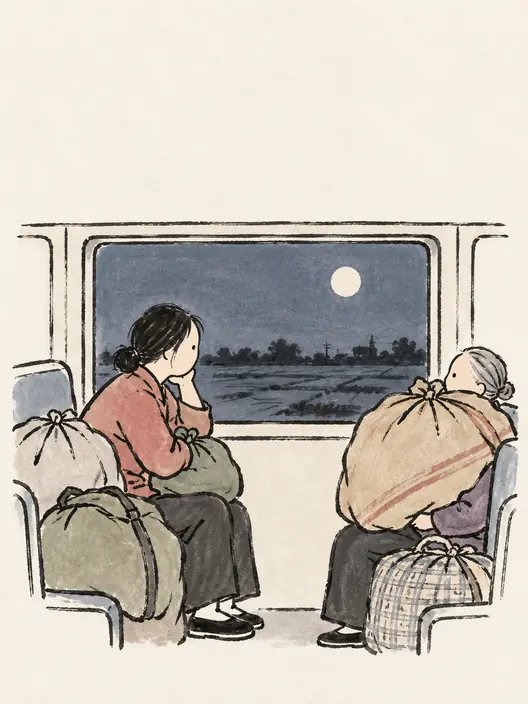 HSK 3
Train Home for New Year
A city worker heads home for New Year, but a delay stalls her train and stirs memories.
6 chapters · audio + pinyin
 HSK 4
The Light Across the River
Reopening her grandmother’s shop, a young woman tracks a mysterious lamp across the river.
7 chapters · audio + pinyin
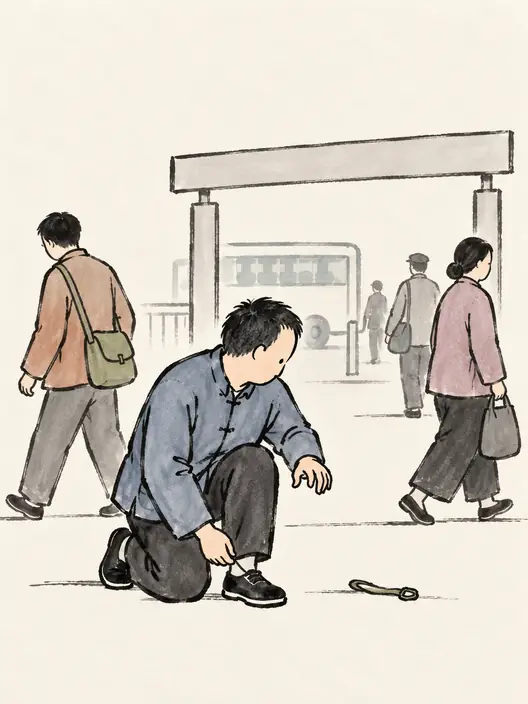 HSK 5
The Borrowed Phone
After losing his bag, a stranded son can't claim his late father's wages and must seek help.
6 chapters · audio + pinyin
 HSK 6
The Smell of Oil at the Night Market
A food inspector traces a night-market illness to tainted oil—and pressure to hide it.
4 chapters · audio + pinyin