
星期六下午,邓一飞在家打电话。
“喂,月华!你在做什么呢?”
“我在看书呢。一飞,什么事?”
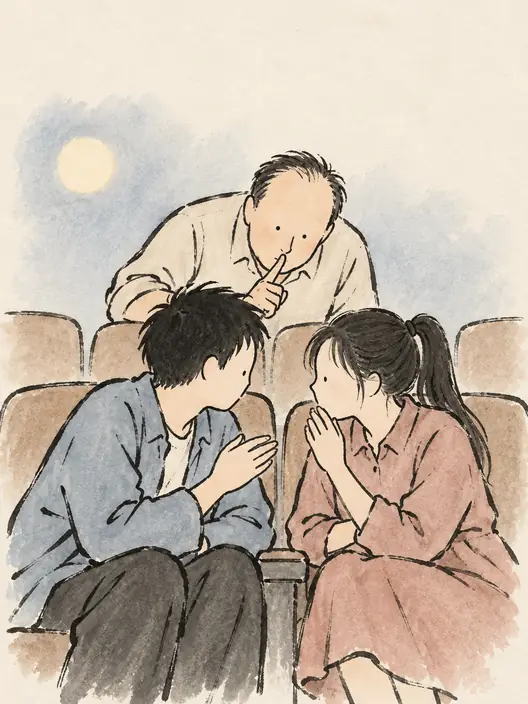
Every one has word-level pinyin, narrated audio and tap-to-define.
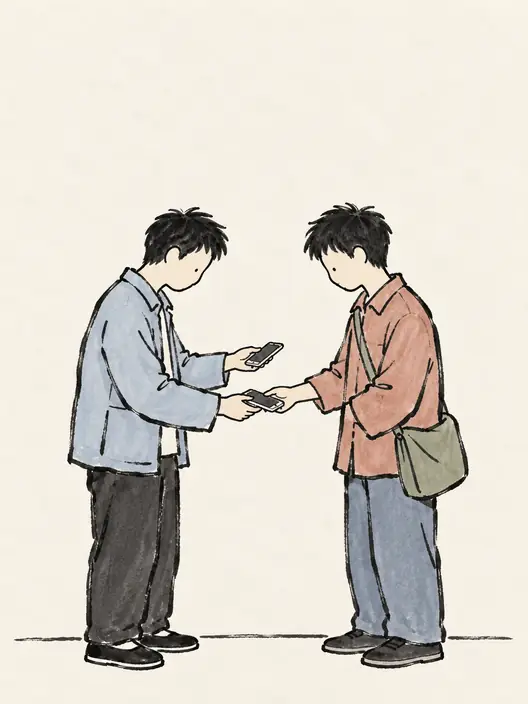
The Wrong Phone
Two classmates take identical phones by mistake and can’t unlock them or answer calls.
3 chapters · audio + pinyin
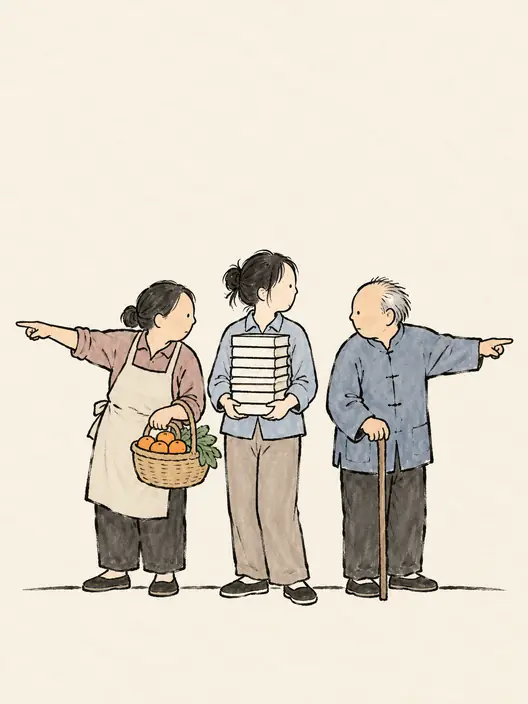
The School Is Not Here
On her first day, the new teacher ends up at a hospital, then gets four different directions.
3 chapters · audio + pinyin
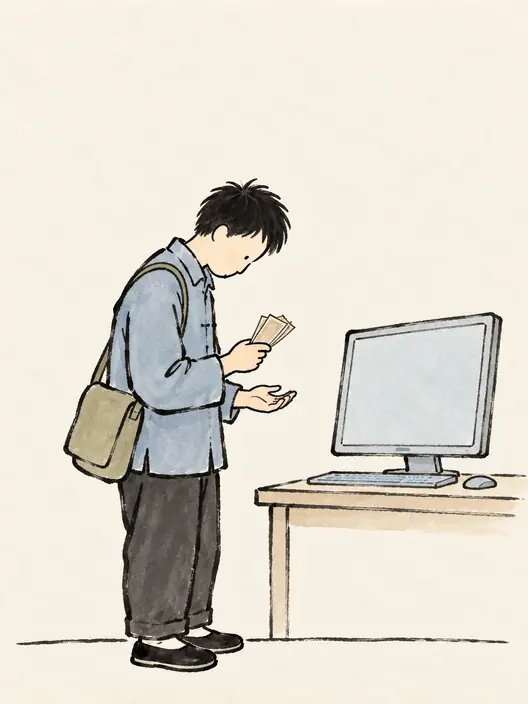
One Hundred Yuan
Seven months of saving gets him half the price of a computer. Then the price goes up.
3 chapters · audio + pinyin
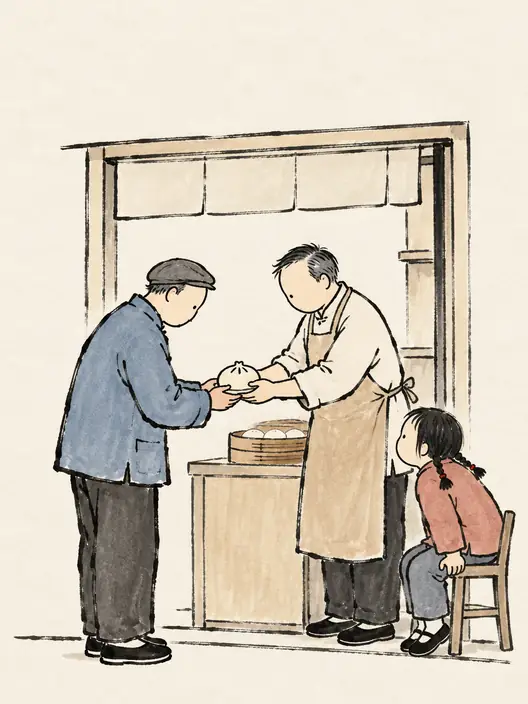
The Shop That Opens Early
The shop wakes her at five every morning. Her teacher asks her who shops there.
3 chapters · audio + pinyin
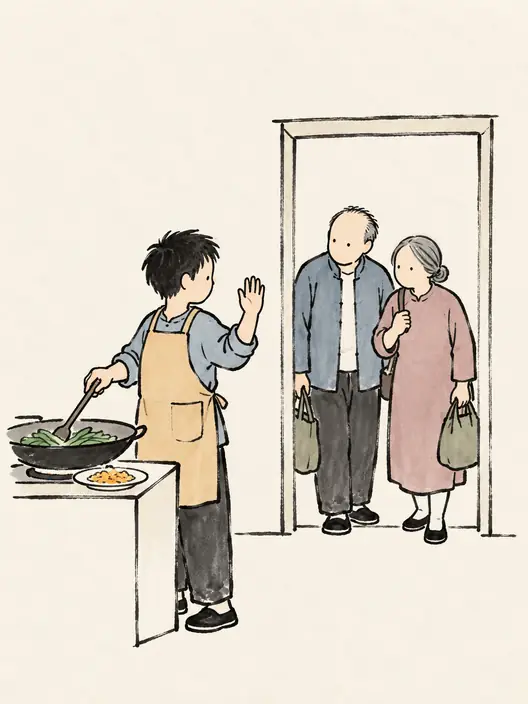
My First Time Cooking
His parents are almost home. The surprise dinner has overcooked eggs and rushed vegetables.
3 chapters · audio + pinyin
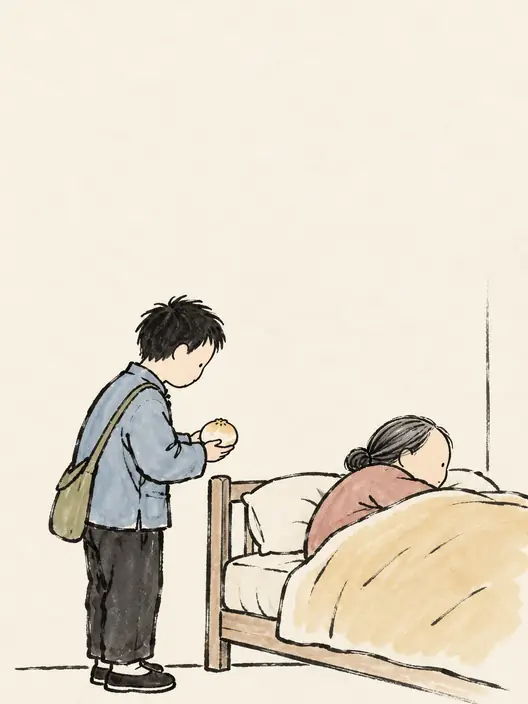
Mother Is Ill Today
Mom stays in bed, won't eat, and won't see a doctor. Her son is getting worried.
3 chapters · audio + pinyin
To read Chinese, learn pinyin and tones first, then learn how characters are built, start with the most frequent characters, and read short graded texts with pinyin support that you reduce over time. You do not need thousands of characters to begin: a few hundred cover most of a beginner story.
Try it now. The passage above is the opening of an HSK 1 story. Play the audio, tap any word for its pinyin and meaning, then switch pinyin off and see what you recognize.
| Step | What it gives you |
|---|---|
| 1. Pinyin and tones | Pronounce, look up and type words |
| 2. How characters work | See patterns instead of pictures |
| 3. Frequent characters first | Cover most of a beginner text |
| 4. Your first sentence | Join sound, characters and grammar |
| 5. Graded stories | Build speed and vocabulary |
Pinyin is the standard way to write Mandarin pronunciation with the Latin alphabet. Mandarin has four main tones, shown by marks: mā, má, mǎ and mà are four different syllables. Neutral-tone syllables are light and carry no mark, like the me in shénme (什么) in the passage above. Learn pinyin first because it lets you pronounce any new word, use a dictionary and type Chinese on your phone.
Spend the first days on the sounds that English does not have, such as x, q, zh and ü, and on hearing the four tones. Read along with audio and copy what you hear.
Keep pinyin in its place. It is a bridge to characters, not the goal. Chinese books, signs and messages are written in characters, so plan to lean on pinyin less as your recognition grows. Our pinyin reading practice guide shows how to move from full pinyin to none.
A Chinese character is not a random picture. Most characters are built from smaller components, and many components repeat across hundreds of characters. Learning the common components turns new characters into combinations of parts you already know.
Components give two kinds of clues. A meaning component hints at the topic: 氵 (water) appears in 河 river, 海 sea and 洗 wash. A sound component hints at pronunciation: 妈 mā borrows its sound from 马 mǎ. These clues help you remember characters, but they are not reliable enough to guess every reading or meaning. For where common characters came from, see Chinese character etymology.
Also learn the difference between characters and words. Many Chinese words have two characters: 电 electric joins 脑 brain to make 电脑 computer, and 视 look to make 电视 television. Read and learn whole words, and study single characters when that helps you recognize them.
A small set of characters does most of the work in beginner texts. We counted every character in our published graded stories (Chinese characters only, including names) and measured how much of the text the most frequent ones cover:
Top 50
Top 100
Top 200
Top 300
Top 500
The HSK 1 shelf has 38 stories and 114 chapters, 65,349 characters in total, using 502 different characters. Knowing its 200 most frequent characters covers more than nine in every ten characters you meet.
Coverage is not comprehension. You also need the words those characters form and the grammar that connects them. But the table shows why frequency matters: learn the common characters well before chasing rare ones. The HSK 1 vocabulary list is a good first set, since our HSK 1 stories are graded against it.
The passage at the top of this page opens the HSK 1 story Movie Night. Its first sentence is:
星期六下午,邓一飞在家打电话。
Xīngqīliù xiàwǔ, Dèng Yīfēi zài jiā dǎ diànhuà.
On Saturday afternoon, Deng Yifei was at home making a phone call.
Read it in chunks: 星期六 Saturday, 下午 afternoon, then a name, 邓一飞, then 在家 at home and 打电话 make a phone call. The time comes before the action, a common Chinese word order.
Read the passage three times. First, read with pinyin and audio. Second, read with pinyin off and tap only the words you cannot recognize. Third, read aloud without help. Each pass trains a different link between sound, character and meaning. For one short passage at every level from HSK 1 to 9, see Chinese reading passages.
Graded stories are written for a limited vocabulary, so you can follow the plot while meeting the same words again in new sentences. That repetition is what turns slow decoding into reading.
Choose a level where you understand the main events without looking up every word. If you need a dictionary for every line, step down a level; if you rarely tap a word, step up.
| Your level | Start with |
|---|---|
| Brand new | HSK 1 stories with full pinyin |
| A few hundred words | HSK 2 stories, Smart pinyin (above-level words only) |
| About 1,000 words | HSK 3 stories, pinyin off for rereads |
Not sure where you are? The HSK level quiz suggests a starting level in a few minutes.
HSKStory publishes multi-chapter graded stories from HSK 1 to HSK 9. In the reader you can switch pinyin between Full, Subtle, Smart and Off, tap any word for its pinyin and meaning, play chapter audio with the current word highlighted, and save words for review.
For what makes Chinese hard and what the State Department estimate means, see Is Chinese Hard to Learn?. To begin, open the Chinese short stories for beginners or go straight to HSK 1 stories.
Character counts measured on all published HSK 1–3 story chapters on November 23, 2026.
It depends on the text. In HSKStory's HSK 1 stories, the 200 most frequent characters make up 91.3% of all running text, and the 300 most frequent make up 97.7%. Newspapers and novels use far more characters, so no single number unlocks every text.
You can learn to recognize characters and meanings without speaking, but reading is easier when you know how words sound. Pinyin and audio connect the written word to its pronunciation, which helps you remember it and follow sentences.
Most beginners start with pinyin and tones, then add characters within a few weeks. Pinyin lets you pronounce new words and use dictionaries and typing. It is a support for reading characters, not a replacement for them.